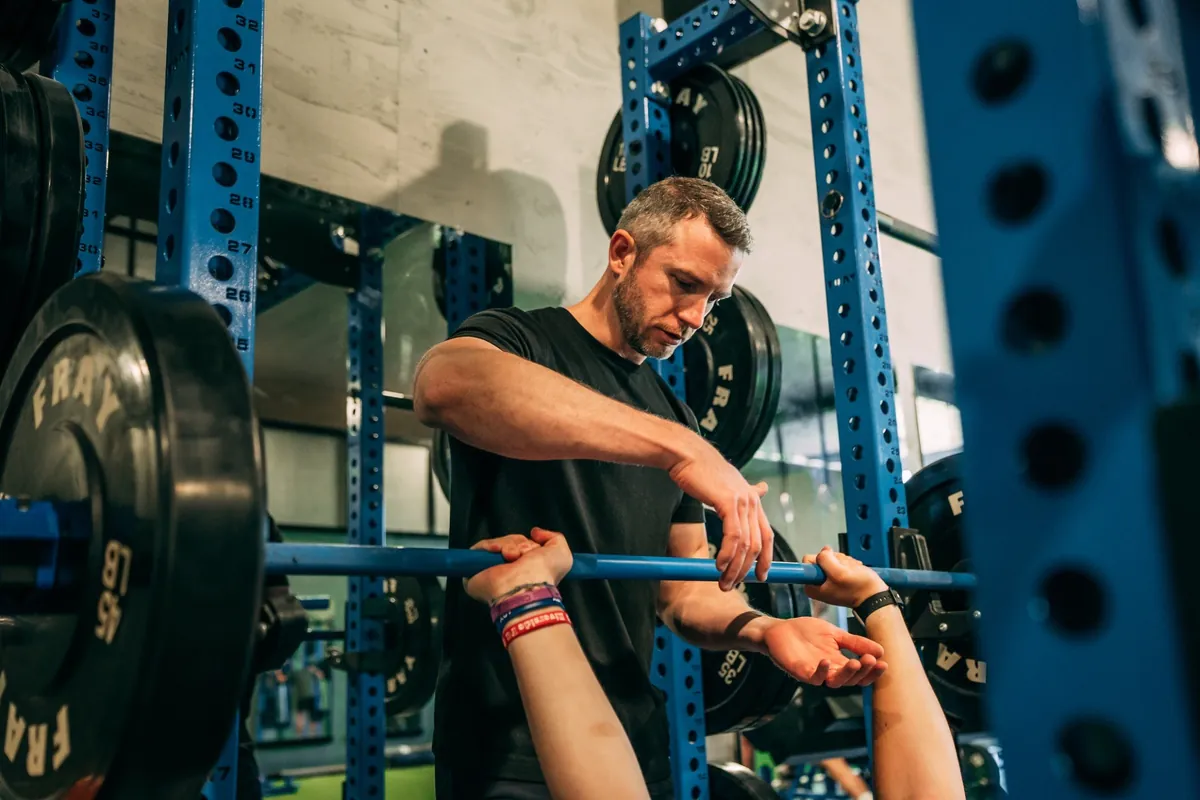
Two athletes walk into the gym and both squat 315 for a set of three. On a normal training log, those entries look identical. But if you measured how fast the bar moved, you might find one athlete was cruising and the other was grinding at his absolute limit. Same weight. Completely different training effect. Velocity-based training is how we tell them apart.
What Bar Speed Tells Us
Every rep moves at a speed, and that speed is not random — it maps closely to how hard the effort really is. A light, explosive rep moves fast. A near-maximal rep moves slow, no matter how hard you try. By putting a small sensor on the bar and reading the velocity of each rep, we get an objective, real-time window into effort and fatigue that a number on a plate simply cannot give us.
This matters because the weight on the bar lies. How heavy 315 feels depends on your sleep, your stress, your last meal, and where you are in the week. Bar speed does not care about the sticker on the plate. It tells us what is actually happening right now, on this rep, for this athlete.
The weight tells you what you loaded. The bar speed tells you what it cost.
Training the Right Quality
Different bar speeds build different qualities. Move a moderate load fast and you train power and rate of force development — the ability to be explosive. Move a heavy load slowly and you train maximal strength. If an athlete needs to be more explosive but keeps grinding heavy, slow reps, they are training the wrong quality for their goal. Velocity gives us a target: we can tell an athlete to keep every rep above a certain speed, and now the set is doing exactly the job we designed it to do.
Autoregulation: Training the Athlete Who Showed Up
Here is where it gets powerful. A written program says "squat 315 today." But what if today the athlete is beat up and 315 is moving like a max? Pushing through builds fatigue, not fitness. What if today they are fresh and 315 is flying — leaving progress on the table? Velocity lets us adjust the load to hit the right training speed on the day, not the load we guessed at when we wrote the program a month ago. We train the athlete who actually showed up, not a plan on paper.
Knowing When to Stop
Bar speed is also one of the cleanest fatigue signals we have. As an athlete tires within a set, their reps slow down. When velocity drops past a certain point, we know the quality reps are done and everything after is just accumulating fatigue for no benefit. Instead of chasing an arbitrary rep count into the ground, we stop the set while it is still productive. More quality, less junk volume, faster recovery for the next session.
Most programs guess at effort and hope. Velocity-based training measures it — so every rep has a reason and every set has a stopping point.
Technology Serving Coaching
None of this replaces coaching — it sharpens it. The sensor does not know your goals, your sport, or your history. It gives us honest data, and the coaching decides what to do with it. That is the FPC standard: bring the tools used in professional sport to athletes at every level, and use them to make better decisions than effort and ego ever could on their own.
Book a Free Performance Assessment.
See what velocity-based training looks like in person — and get real numbers on how you produce force.
Book Free Assessment →