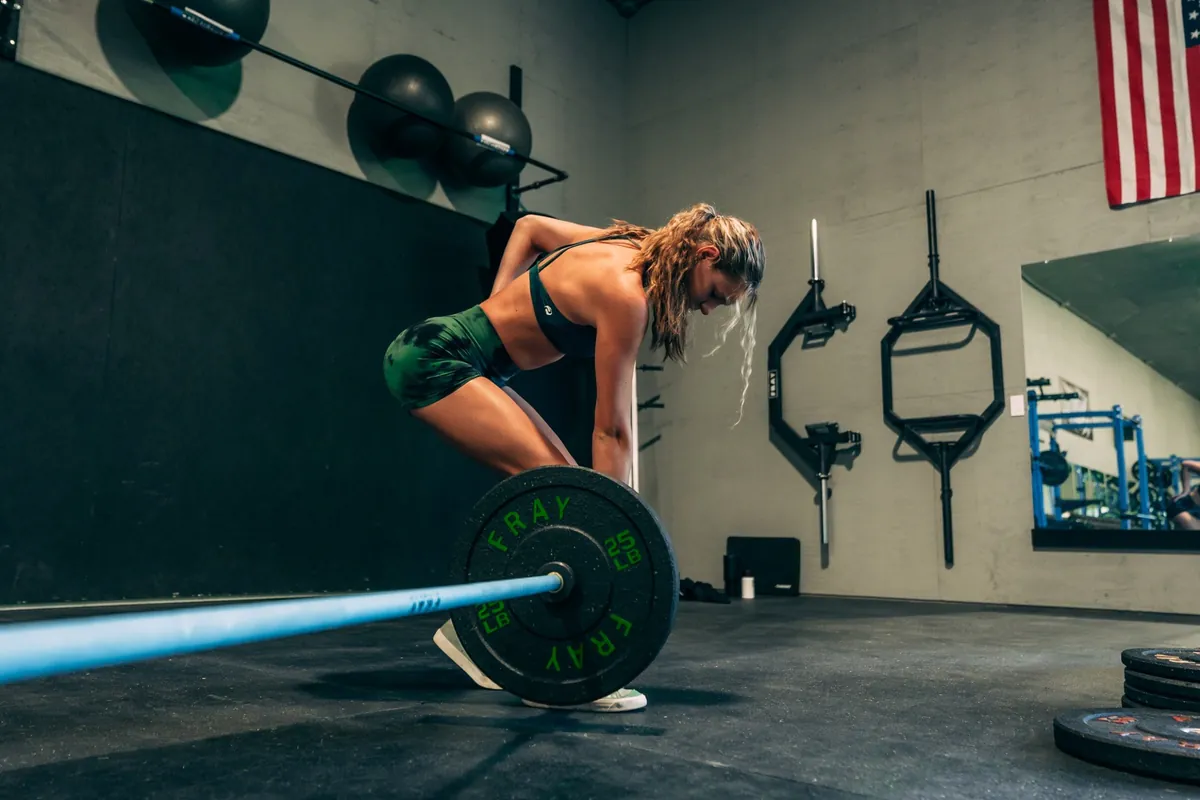
A higher vertical jump comes from getting stronger in the lower body, more efficient at producing force quickly (rate of force development), and better at absorbing and redirecting force on landing — not from doing more jumps. Basketball players who add real inches to their vertical almost always spent more time under a barbell and on landing mechanics than they did jumping in the weeks before the gain showed up.
Every basketball player wants a higher vertical, and almost every basketball player goes about training it the same wrong way: find a jump program, do the jumps, hope for the best. Some of these programs help a little. Most plateau fast, because jumping repeatedly doesn't address the two things that actually limit how high someone can jump — how much force the body can produce, and how efficiently it can produce that force in a short window.
An assessment usually tells the story quickly. An athlete with a mediocre vertical almost always falls into one of two buckets: not strong enough in the posterior chain and quads to produce real force off the ground, or strong enough on paper but too slow to express that strength in the fraction of a second a jump takes place in. Both are trainable. Neither gets fixed by jumping more.
Why Doesn't Jumping More Just Work?
Jumping is a skill and a test, not primarily a training stimulus for the qualities that drive it. An athlete who's weak will get marginally better at the skill of jumping, but they'll hit a ceiling fast because the underlying force production hasn't changed. Meanwhile the volume of repeated max-effort jumping without a strength base is a fast way to aggravate knees and ankles that aren't ready for the load.
Jump training doesn't build the engine. It tests the engine you already built in the weight room.
What Actually Moves the Needle?
Three things, in order of priority for most basketball players:
- Strength in the squat and hinge patterns — a stronger athlete has a higher ceiling for force production, full stop
- Rate of force development work — trap bar jumps, med ball throws, and contrast training that teaches the nervous system to express strength fast
- Landing and deceleration mechanics — absorbing force well protects joints and improves the reactive strength that feeds the next jump
How Long Does It Actually Take?
Most athletes who commit to a real strength and power block see measurable vertical gains in 8 to 12 weeks — not because the program is magic, but because that's roughly how long it takes to build meaningful strength and then teach the nervous system to express it quickly. Athletes chasing faster results with more jumping alone almost always plateau earlier and stay there.
Get stronger first. The vertical takes care of itself once the force is there to express.
Does Body Weight Matter for Vertical Jump?
It matters, but not the way most players assume. Adding useful muscle mass while keeping strength-to-bodyweight ratio high is usually a net positive for jump height, since more force-producing tissue means more force off the ground. The players who hurt their vertical by gaining weight are the ones adding mass without the strength and power work to use it.
A vertical jump number is a symptom of an underlying strength and power profile. Assess that profile, train the actual gaps, and the jump number moves on its own.
Frequently Asked Questions
Do basketball players need to do plyometrics every day to jump higher?
No. Plyometrics and jump training are high-intensity to the nervous system and connective tissue and need recovery between sessions. Most athletes benefit more from 2-3 quality sessions per week paired with strength training than daily jump volume.
How much can a basketball player realistically add to their vertical?
It depends heavily on training age. An athlete new to structured strength training can often add 3-6 inches over a focused offseason. More trained athletes usually see smaller but still meaningful gains, often 1-3 inches, from targeted power and rate-of-force-development work.
Is strength training or jump training more important for vertical jump?
Strength training builds the underlying force production capacity; jump and power training teaches the body to express that strength quickly. Most athletes need both, but an underlying strength deficit should be addressed first since it caps how much power training can accomplish.
Can landing mechanics really affect how high someone jumps?
Yes. Efficient landing and force absorption improve reactive strength, which directly feeds into the next jump, and poor landing mechanics are one of the most common causes of knee and ankle overuse injuries in jump-heavy sports like basketball.
Start With a Free 45-Minute Consultation.
Start with a free 45-minute consultation about your goals, current training, and what is not improving. If FPC is the right fit, Cody will explain the assessment and next steps.
Book a Free 45-Minute Consultation →