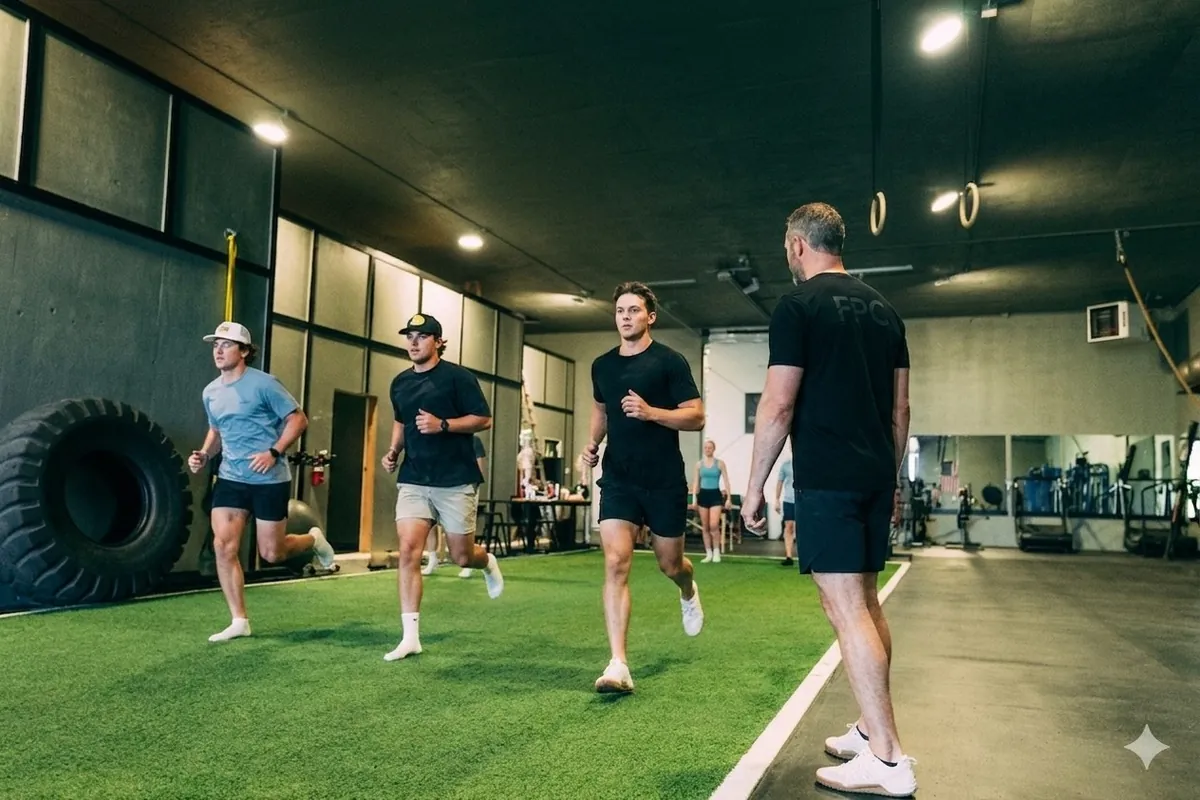
A program built without an assessment is a guess dressed up as a plan — it assumes every athlete needs the same things in the same order. An assessment measures your actual strength, asymmetries, and movement quality first, so the program that follows targets what you specifically need instead of what a generic template assumes you need. That's the difference between training time that compounds into real progress and training time that just keeps you busy.
Every gym has a program. Not every gym has an assessment. That distinction sounds small, but it's the single biggest factor in whether an athlete's training time actually turns into progress or just turns into fatigue.
What's the Difference Between a Program and an Assessment?
A program is a plan built for an average athlete — a template that assumes a certain starting strength level, a certain movement quality, no significant asymmetries. An assessment measures where a specific athlete actually stands: strength relative to bodyweight, left-right asymmetries, movement quality under load, and how they produce and absorb force. The program that follows an assessment is built around that specific athlete. The program that skips assessment is built around a guess.
- An assessment catches a 15% strength asymmetry between legs before it becomes a knee injury
- It identifies whether an athlete's limiting factor is strength, power, or movement quality — three different problems with three different fixes
- It gives a measurable baseline, so six weeks later you know if the plan is working instead of guessing
Why Does Skipping Assessment Waste Training Time?
An athlete with a significant left-right asymmetry who follows a generic strength program will often get stronger on their dominant side and reinforce the imbalance — the exact opposite of what they need. An athlete who's already strong but has poor rate of force development will spend months on heavy strength work that doesn't move the needle on the speed and power that actually limits their performance. Neither of those athletes needs more effort. They need the right target.
You can outwork the wrong program for months and still not fix the thing that's actually holding you back.
How Does an Assessment Change What Gets Trained?
Instead of starting with a template and hoping it fits, an assessment starts with data: force plate or measurable strength testing, movement screening, asymmetry checks, and a conversation about training history and goals. That data determines what the first training block prioritizes — whether that's addressing an asymmetry, building a strength base, or developing rate of force production. Nothing is assumed.
Does This Apply to Every Athlete, Not Just Elite Ones?
Yes — arguably it matters more for developing athletes, because an untrained asymmetry or movement fault has years to compound rather than months. A 13-year-old with a movement pattern that isn't addressed carries that pattern into high school training, when the loads get heavier and the risk gets higher. Catching it early with an assessment is far cheaper than fixing it after an injury.
A program without an assessment isn't necessarily a bad program. It's just not your program. It was written for someone who doesn't exist — the average athlete — instead of the one actually walking in the door.
Frequently Asked Questions
What is the difference between a training program and a movement assessment?
A program is a generic plan built for an average athlete. An assessment measures a specific athlete's strength, asymmetries, and movement quality first, so the program that follows targets what they actually need.
Why does an assessment matter more than just starting a program?
Without assessment data, a program is a guess. It can reinforce existing asymmetries or target the wrong limiting factor, wasting months of training effort on the wrong problem.
Do young athletes need an assessment too, or just elite athletes?
Young athletes benefit even more, since an unaddressed asymmetry or movement fault has years to compound as training loads increase through high school and beyond.
What does an FPC assessment actually measure?
Strength relative to bodyweight, left-right asymmetries, movement quality under load, and force production and absorption — giving a measurable baseline to build a targeted program from.
Start With a Free 45-Minute Consultation.
Start with a free 45-minute consultation about your goals, current training, and what is not improving. If FPC is the right fit, Cody will explain the assessment and next steps.
Book a Free 45-Minute Consultation →