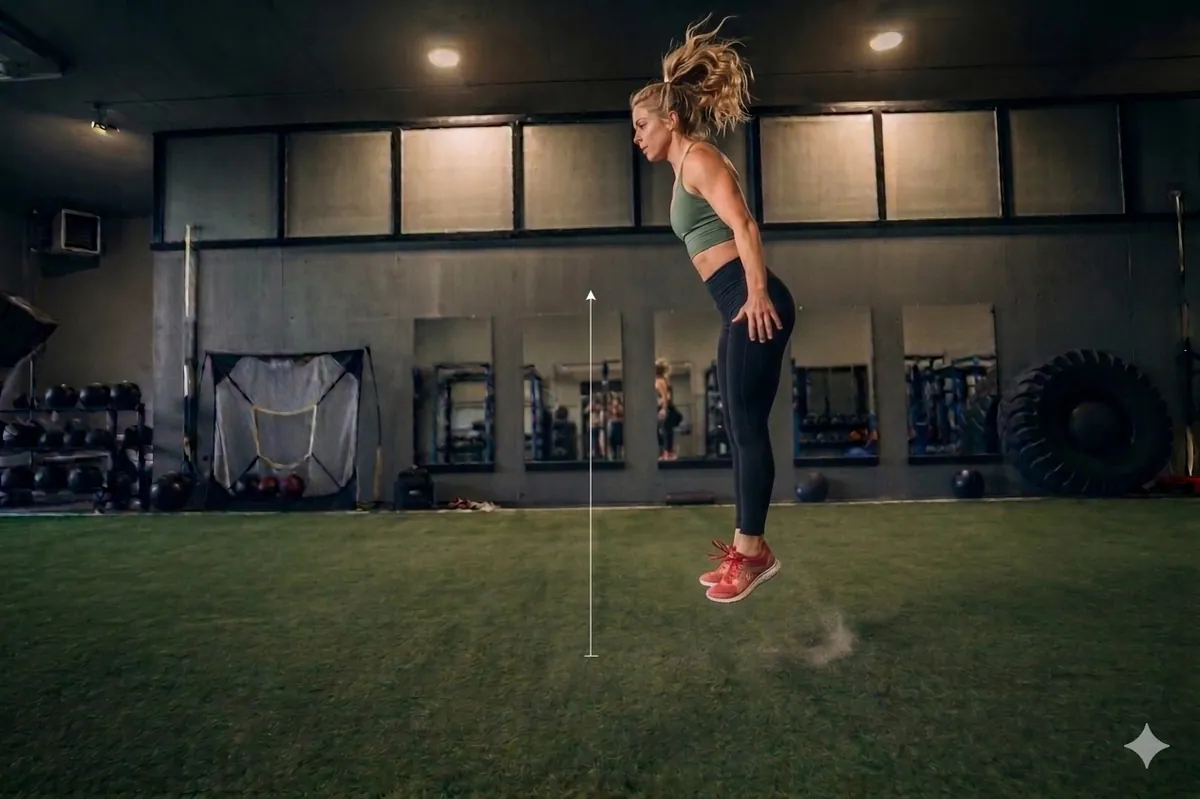
A standard fitness test gives you a score — a max lift, a sprint time, a jump height. The FPC assessment measures the relationships behind those numbers: reactive strength ratio (RSR), eccentric-to-concentric ratio (EUR), left-right asymmetry, and bar velocity — the data that predicts injury risk and shows exactly what's limiting performance. A score tells you where you are. An assessment tells you why, and what to fix first.
Walk into most gyms and "assessment" means a body fat scan and a few bodyweight squats. You get a number, maybe a printout, and then a program that looks like everyone else's. That's a fitness test. It's not the same thing as an assessment, and the difference matters more than most people realize until they've been through both.
What Does a Fitness Test Actually Measure?
A fitness test measures output — how much you lifted, how fast you ran, how high you jumped. Those numbers matter, but on their own they're incomplete. Two athletes can post the same vertical jump and be working from completely different physical pictures: one limited by force production, the other by how fast they can apply it. A single number can't tell you which.
A score tells you where you are. It doesn't tell you why you're there.
What Is Reactive Strength Ratio (RSR) and Why Does It Matter?
RSR compares how much force an athlete produces reactively — off a jump, off a cut — against how much force they can produce under control. A low RSR relative to raw strength usually means the athlete is strong but slow to express it, which shows up as a step late on the field even when the weight room numbers look fine. That's invisible on a max-lift test. It's the whole point of an RSR measurement.
Why Track Eccentric-to-Concentric Ratio (EUR) and Asymmetry?
EUR measures how well an athlete decelerates and controls load compared to how hard they can push it — a mismatch here is one of the more reliable predictors of soft tissue injury, especially in cutting and landing sports. Left-right asymmetry does something similar: a 15% strength gap between legs doesn't show up on a total-load bench or squat number, but it shows up on the field as a hamstring pull or an ACL risk waiting for the wrong cut at the wrong angle.
Bar velocity adds another layer most gyms skip entirely — measuring how fast the weight actually moves, not just whether the rep gets completed. That number changes how a program is built week to week, because it shows whether an athlete is training the quality they think they're training.
- RSR shows whether force gets expressed fast enough to matter on the field, not just under control
- EUR flags deceleration and control gaps tied to soft tissue injury risk
- Asymmetry testing catches left-right gaps invisible on total-load lifts
- Velocity data confirms whether training is actually building the quality it's meant to
None of this replaces effort or consistency — an athlete still has to do the work. But it changes what work gets prescribed, and that's the difference between a program built on a guess and one built on data specific to that athlete.
Frequently Asked Questions
How is the FPC assessment different from a regular fitness test?
A fitness test measures output — a max lift, a sprint time. The FPC assessment measures the relationships behind those numbers, like RSR, EUR, and asymmetry, which show why the output is what it is and what's actually limiting it.
What is reactive strength ratio (RSR)?
RSR compares how much force an athlete produces reactively, like off a jump or cut, versus how much they can produce under control. A low RSR relative to raw strength means force isn't being expressed fast enough, even if strength numbers look good.
Can asymmetry between legs really cause an injury?
Yes. A meaningful left-right strength gap doesn't show up on a total-load lift, but it's one of the more reliable predictors of injury risk in cutting and landing sports, since the weaker side gets exposed under game speed.
Do I need to be an elite athlete to get an assessment?
No. The assessment is useful at any level — it identifies limiting factors whether you're a first-time lifter or training for college recruiting, so the program targets what actually needs work.
How long does the FPC assessment take?
It's built to be efficient — enough data to build an accurate picture without turning into an all-day process. Most athletes are in and out in a single session.
Start With a Free 45-Minute Consultation.
Start with a free 45-minute consultation about your goals, current training, and what is not improving. If FPC is the right fit, Cody will explain the assessment and next steps.
Book a Free 45-Minute Consultation →