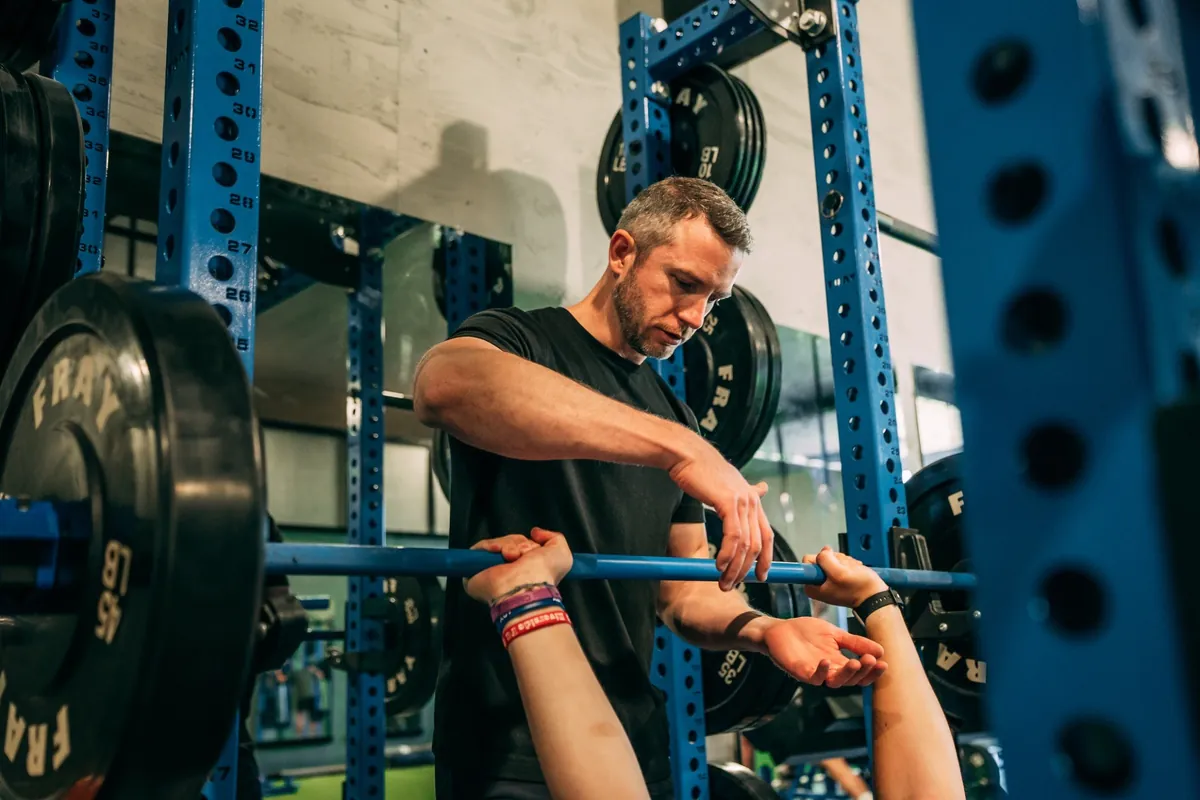
Dryland training builds the strength, power, and shoulder stability that pool yardage alone can't develop, especially explosive force off the start and turns, and the rotational core strength that drives every stroke. Swimmers who skip it tend to plateau on speed even as their conditioning improves.
A common assumption is that the fastest way to get faster in the water is to spend more time in the water. To a point, that's true, yardage builds the aerobic and technical base every swimmer needs. But past a certain point, more laps stop producing more speed. What's usually missing isn't more swimming. It's the strength and power work happening on land that the water alone can't build.
Swimming is a strength sport wearing a conditioning sport's reputation. Every stroke is a repeated application of force against resistance, and the swimmers who keep getting faster year over year are almost always the ones doing structured dryland work alongside their pool volume, not instead of it.
Why Can't Pool Volume Alone Build Real Strength?
Water provides resistance, but it's a fraction of what's needed to build maximal force production, and it can't load the body the way a barbell or a jump can. A swimmer can log tens of thousands of yards a week and still lack the raw strength to generate a powerful start, an explosive turn, or a strong finishing kick, because those movements require force the water simply doesn't demand in the same way.
The water teaches technique and builds an engine. It doesn't build the force behind the stroke.
What Should Dryland Training Actually Include?
Three things matter most: lower body power for starts and turns, rotational core strength that transfers to every stroke, and shoulder stability work that keeps a joint doing tens of thousands of repetitions a season healthy. Box jumps and trap bar work build the explosive power behind a start. Med ball rotational throws build the trunk power that drives freestyle and butterfly. Scapular and rotator cuff strengthening protects a shoulder that takes on enormous repetitive load.
- Lower body power: jumps, sprints, and trap bar work for explosive starts and turns
- Rotational core strength: med ball throws and anti-rotation work that transfers to stroke power
- Shoulder health: scapular stability and rotator cuff strengthening to handle repetitive overhead load
- General strength base: squat and pull patterns that raise the ceiling everything else is built on
Most races are decided in the first fifteen meters. That's a dryland problem, not a pool problem.
Isn't There a Risk of Overtraining With Pool Volume Already So High?
Yes, if dryland is added on top of an already maxed-out schedule without adjusting anything else. This is where a lot of programs go wrong, they bolt on lifting without reducing volume elsewhere, and the athlete ends up worse off. Dryland has to be planned alongside pool volume, not stacked recklessly on top of it, with total training load managed as one system rather than two separate ones.
When Should a Young Swimmer Start Dryland Work?
Earlier than most programs assume, but with age-appropriate loading. A younger swimmer benefits from general athletic development, coordination, body control, and a basic strength foundation, well before heavy lifting makes sense. That foundation is what makes the more specific power work productive once the athlete is ready for it in the teenage years.
The swimmers who keep dropping time year after year aren't just the ones logging the most yardage. They're the ones building the strength and power in the weight room that the water was never going to build on its own.
Frequently Asked Questions
What is dryland training for swimmers?
Dryland training is strength and power work done outside the pool, typically including lower body power for starts and turns, rotational core work for stroke power, and shoulder stability exercises, to build force production that pool volume alone can't develop.
Why isn't swimming more yardage enough to get faster?
Pool volume builds conditioning and technique, but water resistance is too light to build maximal strength and explosive power. Past a certain point, more laps stop producing speed gains without dedicated strength work supporting them.
Can dryland training cause overtraining in swimmers?
It can if added on top of an already high pool volume without adjusting the overall training load. Dryland should be planned alongside pool work as one integrated program, not stacked on top of an unchanged swim schedule.
At what age should swimmers start dryland training?
General athletic development and coordination work can start young, but more specific strength and power training typically ramps up in the teenage years once an athlete has an adequate movement and strength foundation.
Build the Power the Pool Alone Can't.
FPC builds dryland programs around explosive starts, stroke power, and shoulder health for competitive swimmers. Start with an assessment.
Book Free Assessment →