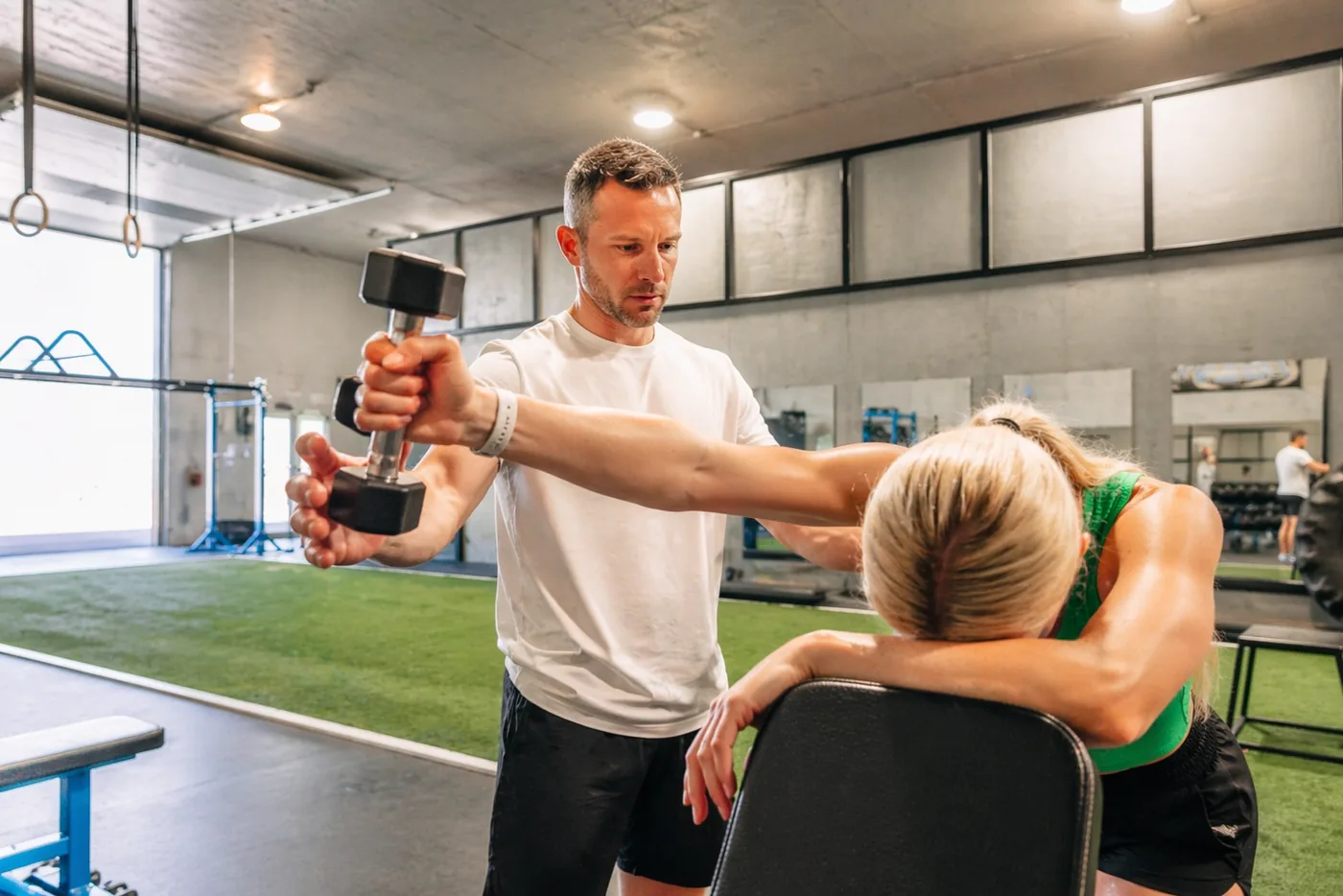
Choosing a strength coach shouldn't start with certifications on a wall or how nice the facility looks — it should start with whether the coach assesses before programming, individualizes training instead of running everyone through the same template, and can explain why an athlete is doing what they're doing. A good coach tracks progress with real numbers, not just effort or attendance. If a coach can't explain the reasoning behind a program or point to how it's adjusted for a specific athlete, that's the clearest red flag.
Parents and athletes usually pick a strength coach the same way they'd pick most services — by reputation, by facility, by a certification hanging on the wall. None of those things tell you whether the coach can actually build an athlete. The questions that matter are less visible and rarely get asked.
Does the Coach Assess Before They Program?
A coach who starts every athlete on the same template, regardless of their strengths, weaknesses, or injury history, isn't coaching — they're running a class. The first real signal of a good coach is whether they test before they train, so the program is built around what a specific athlete actually needs instead of a generic starting point.
If the program looks the same for every athlete who walks in, it was never built for any of them specifically.
Can They Explain the Why Behind the Program?
Ask a coach why an athlete is doing a specific exercise, at that volume, at that point in the program. A good coach has a clear answer tied to that athlete's goals or limiting factors. A vague answer, or one that sounds the same for every athlete, means the program isn't actually individualized — it's just being presented that way.
Do They Track Progress With Real Numbers?
Effort and attendance are easy to measure and easy to praise, but they're not the same as progress. A coach worth trusting tracks actual numbers — strength benchmarks, speed times, mobility scores — and can show an athlete or parent concrete movement over time, not just a good attitude in the gym.
At FPC, every athlete starts with an assessment, and every program gets built and adjusted from that data — not a template that gets reused across every athlete who signs up. That's the standard parents and athletes should be holding any coach to, regardless of where they train.
- A good coach assesses before programming, not after signing you up
- They can explain why an athlete is doing a specific exercise, not just that they should
- Real progress gets tracked with numbers — strength, speed, mobility — not just effort or attendance
Certifications and a clean facility are easy to display. Assessment, individualization, and honest tracking are harder to fake — and they're the things that actually determine whether an athlete gets better.
Frequently Asked Questions
What's the biggest red flag when choosing a strength coach?
A coach who puts every athlete through the same program regardless of their goals, weaknesses, or injury history — that means there was never a real assessment behind the plan.
Do certifications matter when picking a coach?
They can indicate a baseline of knowledge, but they don't tell you whether a coach assesses individually, adjusts programs, or tracks real progress. Those matter more day to day.
How do I know if my athlete's program is actually individualized?
Ask the coach to explain why your athlete is doing a specific exercise at a specific volume. A clear, athlete-specific answer is a good sign; a generic one isn't.
What should a coach be tracking besides effort?
Concrete numbers — strength benchmarks, speed times, mobility scores — so progress can be shown, not just assumed from attendance or attitude.
Start With a Free 45-Minute Consultation.
Start with a free 45-minute consultation about your goals, current training, and what is not improving. If FPC is the right fit, Cody will explain the assessment and next steps.
Book a Free 45-Minute Consultation →