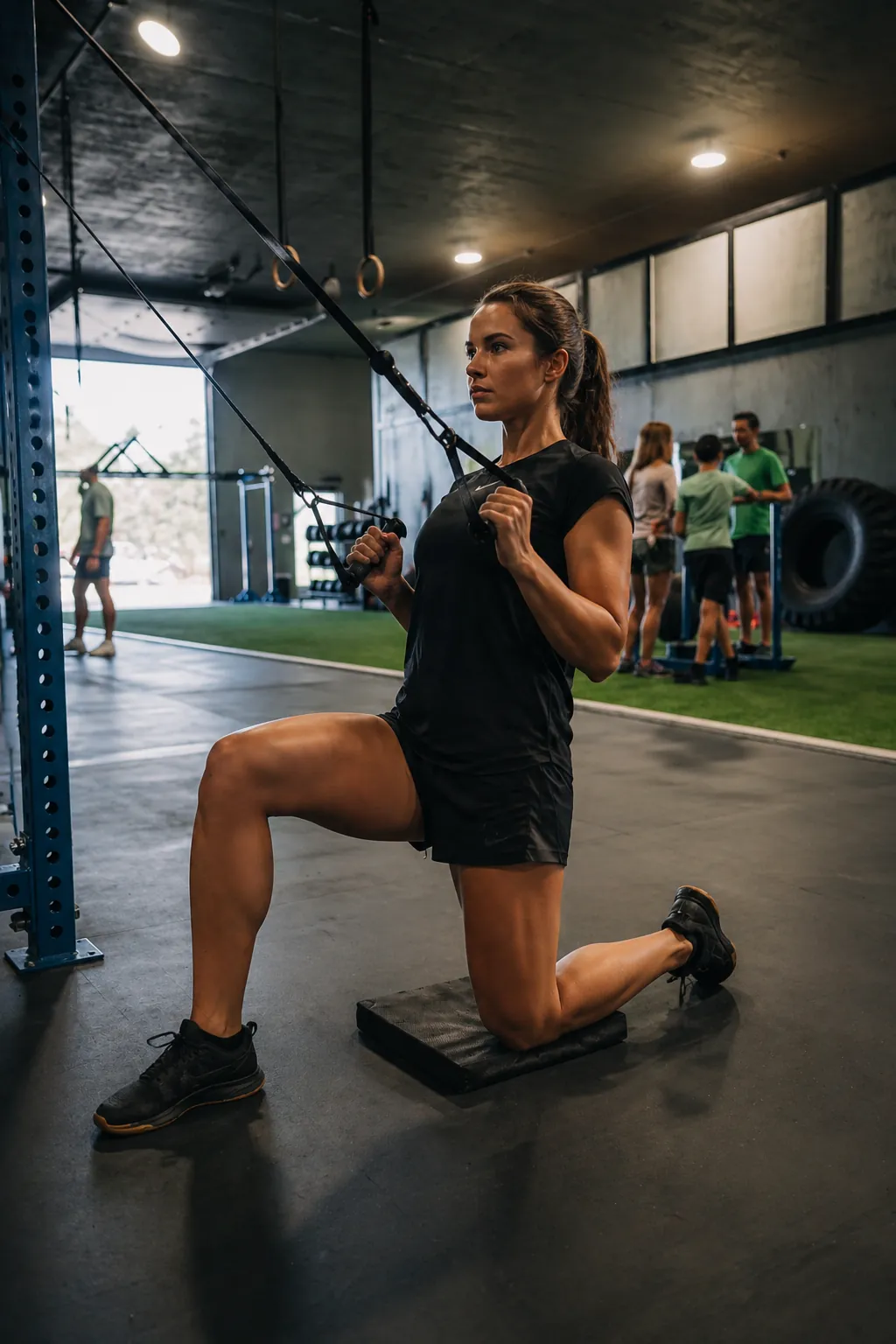
Real arm care isn't a five-minute band routine before practice — it's built on three things: full-body strength that takes stress off the shoulder and elbow, scapular and rotator cuff work that's actually programmed and progressed (not just looped forever), and managed throwing workload across the year. Bands alone don't prevent injuries; an underprepared arm doing too much, too soon, does.
Ask most throwing athletes what their arm care program looks like and you'll hear the same answer: a few resistance bands, some circles, maybe a sleeper stretch, done in the five minutes before practice starts. That's not nothing, but it's not arm care either — it's a warm-up ritual that's been mislabeled. Real arm care is a training program, not a pre-practice checklist.
Why Isn't Band Work Alone Enough?
Bands have a place — they wake up the rotator cuff and scapular stabilizers before throwing. But they're low-load, low-progression, and usually never change from January to October. An arm that's strong enough in November should be doing more than banded external rotations by August. If the program never progresses, the tissue never actually gets more resilient — it just gets warmed up.
Bands prepare the arm for today's session. They don't build the capacity to survive a full season.
Does Full-Body Strength Actually Protect the Shoulder?
Yes — and this is the part most arm care programs skip entirely. A throw isn't an arm movement, it's a whole-body sequence that starts in the legs and hips and transfers force up through the trunk before it ever reaches the shoulder. An athlete with weak hips or a trunk that can't stabilize under rotation ends up compensating by putting more stress through the arm to generate the same velocity. Strength training the legs, hips, and core isn't separate from arm care — it's the foundation of it.
What Role Does Workload Management Play?
An arm that's strong and mobile can still break down if it's asked to throw too much, too often, without recovery. Pitch counts exist for a reason, but workload goes beyond the mound — bullpens, long toss, and off-season throwing all add up. Tracking total throwing volume across the year, not just in-game pitch counts, is one of the biggest levers for staying healthy through a full season.
At FPC, arm care starts with an assessment: how the shoulder moves, how the hips and trunk transfer force, and where the athlete is already compensating. From there, a program progresses strength and stability across the season instead of repeating the same five band exercises from tryouts through playoffs.
- Band work is a warm-up tool, not a full arm care program — it needs to progress
- Weak hips and a poorly stabilized trunk force the shoulder and elbow to compensate
- Tracking total throwing workload across the year matters more than any single pitch count
Arm care that actually works treats the throwing arm as the end of a chain, not an isolated joint — and builds the rest of that chain strong enough to take the load off it.
Frequently Asked Questions
Is band work enough to prevent arm injuries in pitchers?
No. Bands are a useful warm-up tool but a low-load routine that never progresses won't build the strength and capacity needed to withstand a full season of throwing.
Does leg and hip strength really affect shoulder health in throwers?
Yes. A throw is a whole-body movement — weak hips or a trunk that can't stabilize under rotation forces the shoulder and elbow to compensate, increasing injury risk.
What's the biggest factor in preventing throwing injuries?
Managed workload across the full year — bullpens, long toss, and games combined — paired with progressive strength training, not just in-game pitch counts alone.
How does FPC approach arm care differently?
It starts with an assessment of shoulder mobility, hip and trunk stability, and current compensations, then builds a progressive strength program around what's actually found — not a generic band routine.
Should young throwers start arm care programs early?
Yes, early and age-appropriate strength and mechanics work builds the foundation before high workload throwing begins, rather than reacting after pain shows up.
Start With a Free 45-Minute Consultation.
Start with a free 45-minute consultation about your goals, current training, and what is not improving. If FPC is the right fit, Cody will explain the assessment and next steps.
Book a Free 45-Minute Consultation →