Baseball players get faster and more explosive by training first-step acceleration, rotational power through the hips and torso, and arm care as a system — not by running long-distance sprints or generic gym workouts. Most baseball movements happen in the first 10-15 feet or in a single rotational swing, so training needs to match those demands specifically. An assessment identifies whether a player's limiting factor is acceleration, rotational force, or durability before building the program around it.
Baseball is a strange sport to train for because so little of it looks like "speed" in the traditional sense. There's no 40-yard dash on the field. What actually matters is how fast you get off first base, how much force you put into a swing, and whether your arm can hold up across a long season. Training that ignores those specifics — generic conditioning, generic lifting — leaves real performance on the table.
What Kind of Speed Does Baseball Actually Reward?
Almost every explosive action in baseball happens in a short window — stealing a base, breaking on a ground ball, first step out of the batter's box. That's acceleration, not top-end speed. A player who's blazing fast at 40 yards but slow off the mark won't beat a throw to first or get a good jump on a steal.
Training acceleration means short, max-effort sprints (10-20 yards), reactive starts, and drills that build force production out of a dead stop — not long-distance conditioning runs that build an entirely different energy system.
A baseball player doesn't need to be fast for 40 yards. He needs to be fast for the first five steps.
Why Does Rotational Power Matter So Much?
Hitting and throwing are both rotational — force generated through the ground, transferred through the hips, and released through the torso and arm. An athlete can be strong in a straight-line sense (squat, deadlift) and still lack the rotational power that actually shows up as bat speed or throwing velocity.
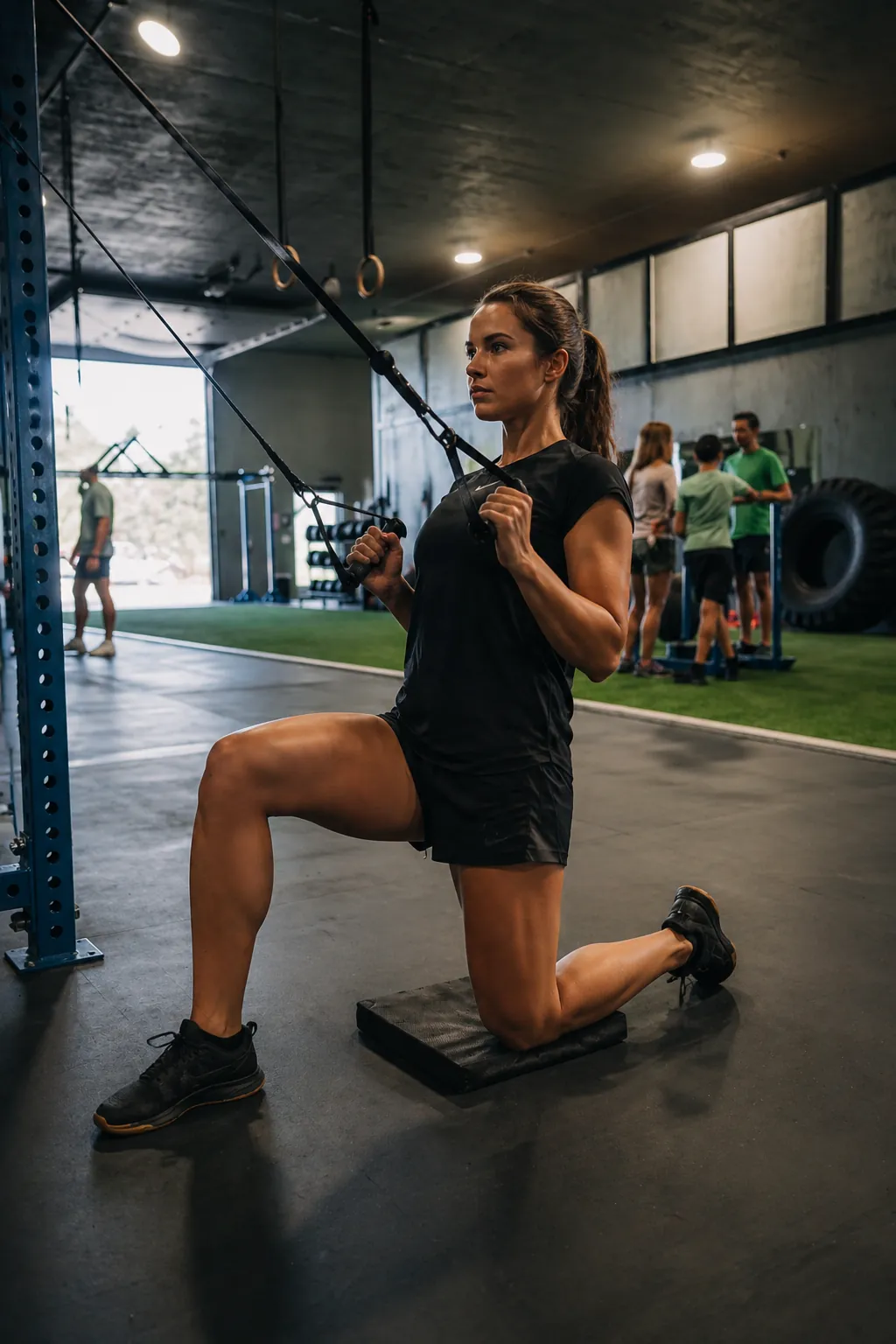
Rotational power gets trained with medicine ball throws, cable rotations, and hip-driven strength work — not just more reps of traditional lifts. It's a separate quality that has to be trained on purpose.
What About Arm Health?
This is where baseball training differs most from other sports. A player can be faster and more powerful and still lose the season to an arm injury if durability wasn't built alongside performance. Arm care isn't a five-minute warmup add-on — it's shoulder and scapular strength, throwing volume management, and recovery built into the plan from day one.
We see this constantly with baseball athletes at FPC — a player shows up chasing exit velocity or 60-yard dash times, and the actual limiting factor turns out to be an arm that can't handle the volume being asked of it. Fix the durability piece and the performance numbers follow, because the player can finally train and compete without managing pain.
How Should Training Actually Be Structured?
Three pillars, trained together, not in isolation:
- Short acceleration and first-step work for base running and defense
- Rotational power development for hitting and throwing
- Arm care and durability built into every week, not just during a flare-up
Which one needs the most attention depends on the athlete. A pitcher's priorities aren't a middle infielder's priorities. That's exactly what an assessment is for — measuring where the actual gap is instead of assuming every baseball player needs the same program.
Frequently Asked Questions
Do baseball players need to work on top-end speed?
Not primarily. Most explosive actions in baseball happen in the first 10-20 feet, so first-step acceleration matters far more than top-end sprint speed.
How do baseball players train for more power?
Through rotational power work — medicine ball throws, cable rotations, and hip-driven strength training — since hitting and throwing are rotational movements, not straight-line ones.
Why do baseball players get arm injuries even when they're strong?
Strength alone doesn't protect the arm. Durability requires dedicated shoulder and scapular strength plus managed throwing volume and recovery, which general strength training doesn't automatically cover.
What should a baseball player prioritize first — speed, power, or arm care?
It depends on the individual athlete's position and current limiting factor, which is why assessing acceleration, rotational power, and arm durability separately matters more than following a generic program.
Start With a Free 45-Minute Consultation.
Start with a free 45-minute consultation about your goals, current training, and what is not improving. If FPC is the right fit, Cody will explain the assessment and next steps.
Book a Free 45-Minute Consultation →