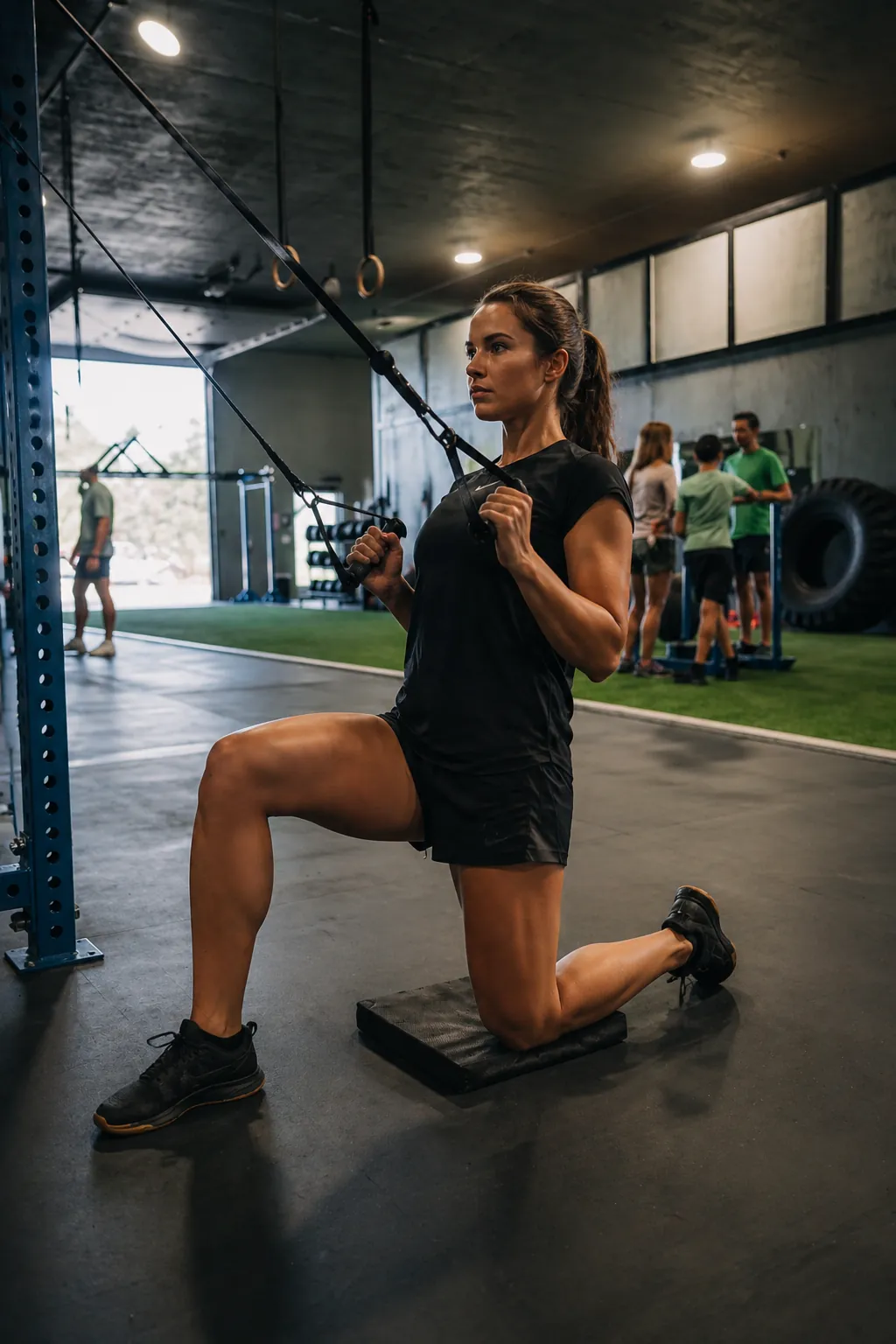
In-season training has one job: maintain the strength, speed, and movement quality built in the off-season without adding fatigue on top of games and practice. That means lower volume, higher intent, fewer but more targeted sessions, and constant load management around the competition schedule — not chasing new PRs and not stopping training altogether. Both extremes cost performance; the middle is where in-season programs actually work.
Two mistakes show up constantly once a season starts. Athletes either drop training entirely because "there's no time" and "I'm already tired from games," or they keep training at full off-season volume on top of a full competition schedule. Both end the same way — worse performance by the back half of the season, just for different reasons.
Why Does Stopping Training In-Season Backfire?
Strength and speed qualities decay without maintenance, and that decay compounds over a long season. An athlete who trained hard all off-season and then stops the moment games start is spending the first half of the season riding a fading base — and by playoffs, a lot of that off-season work has quietly eroded. The goal in-season isn't building; it's not losing what's already there.
In-season training isn't about getting better. It's about not getting worse while the season happens.
What Happens When Athletes Train Too Hard During the Season?
The opposite mistake is just as common — treating in-season training like off-season, chasing volume and intensity on top of an already demanding game and practice schedule. That's a fast path to nagging injuries and dead legs on game day, because the body never gets a real chance to recover from the combined load of games plus a full training block.
So What Does In-Season Training Actually Look Like?
Lower volume, higher intent. Fewer total sessions, each one focused and efficient rather than long and exhausting. Load gets managed around the game schedule — heavier or more demanding sessions further from competition, lighter ones closer to it — so training supports performance instead of competing with it.
We build in-season plans around the actual schedule, not a generic template — how many games this week, how much travel, how the athlete is recovering. That's the only way to keep training productive without it becoming one more source of fatigue an already-taxed athlete has to manage.
- In-season training maintains off-season gains — it doesn't try to build new ones
- Stopping training entirely lets strength and speed quietly decay over a long season
- Overtraining in-season adds fatigue on top of games and raises injury risk
- Load should be planned around the actual game schedule, not a fixed weekly template
Done right, in-season training is barely noticeable day to day — a short, focused session here and there. Done wrong in either direction, it shows up in October as an athlete who peaked in August or one who's breaking down by the playoffs.
Frequently Asked Questions
Should athletes stop lifting during their season?
No. Stopping entirely lets strength and speed decay over the course of a season, which shows up as worse performance by the back half. The goal in-season is maintenance, not a full stop.
How much should training volume drop during the season?
Significantly — in-season sessions should be fewer and more focused than off-season, with load managed around the game and practice schedule rather than following a fixed off-season template.
Can in-season training cause injuries?
It can if volume and intensity aren't scaled down from off-season levels. Training too hard on top of a full competition schedule is a common cause of in-season soft tissue injuries.
How does FPC plan in-season training around a game schedule?
By adjusting session timing and intensity to the actual weekly schedule — placing more demanding work further from competition and lighter sessions closer to game day.
What's the goal of in-season training if not to get stronger?
Maintaining the strength, speed, and movement quality already built, so an athlete finishes the season close to where they started it instead of fading by the playoffs.
Start With a Free 45-Minute Consultation.
Start with a free 45-minute consultation about your goals, current training, and what is not improving. If FPC is the right fit, Cody will explain the assessment and next steps.
Book a Free 45-Minute Consultation →