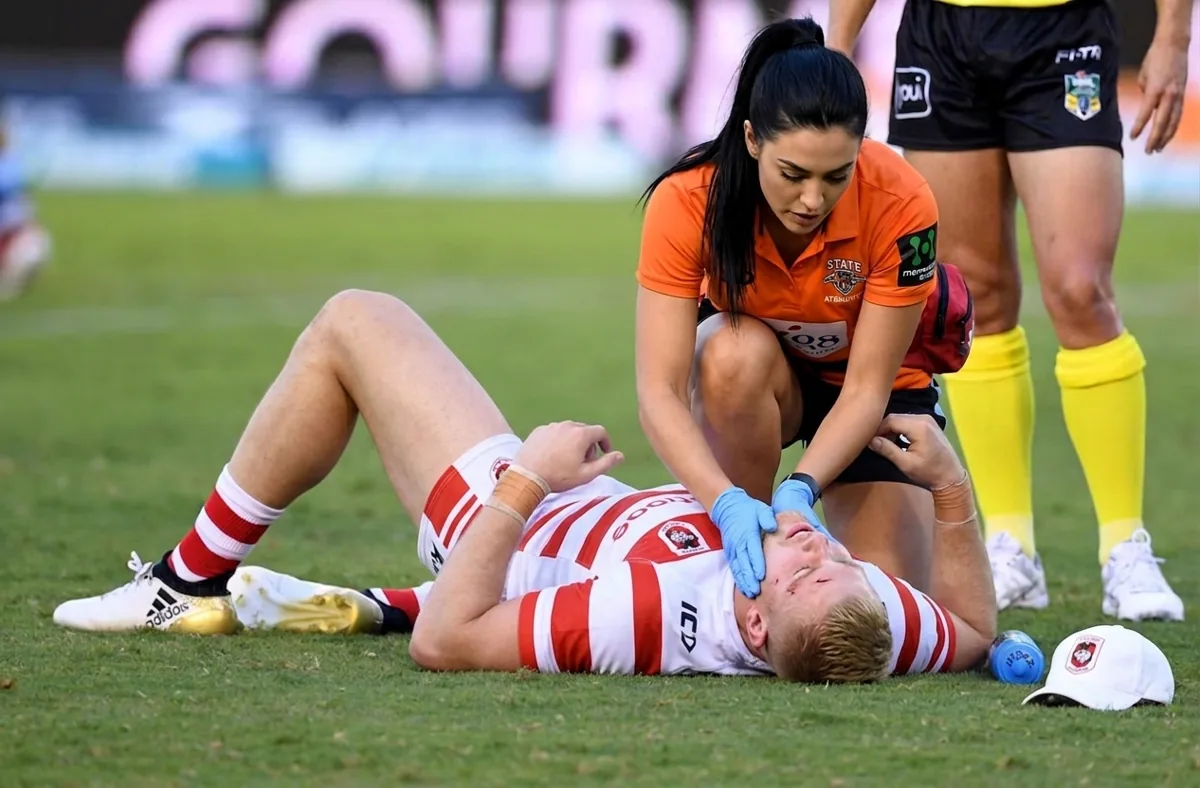
Being symptom-free at rest is only the first step of concussion recovery, not the finish line — the brain's ability to tolerate exertion, quick head movement, and reaction demands under fatigue needs to be tested in a graded, stepwise way before contact resumes. Athletes who skip straight from 'feeling fine' to full practice are at meaningfully higher risk of a second, more serious injury.
Every concussion conversation eventually lands on the same question from an athlete or parent: "the headache's gone, why can't I play?" It's a fair question, and it points to the most common misunderstanding in concussion recovery — that feeling normal at rest means the brain is ready to handle the demands of contact sport again. Those are two different things.
Why Isn't Symptom-Free the Same as Ready?
Symptoms at rest are the most obvious sign of a concussion, but they're also the first thing to resolve — often well before the brain has fully recovered its tolerance for exertion, rapid head movement, and the split-second reaction demands of live play. An athlete can feel completely fine sitting still and still get overwhelmed the moment they're sprinting, cutting, and reacting to contact at the same time.
Resting symptoms tell you the injury has calmed down. They don't tell you the brain can handle a full-speed practice.
What Does a Graded Return Actually Look Like?
A real return-to-play process moves through stages — light aerobic work, then sport-specific movement without contact, then non-contact training drills, then full-contact practice, then game return — with at least 24 hours between stages and a return to the previous stage if any symptom reappears. Skipping stages because an athlete "feels fine" removes the exact checkpoints designed to catch a brain that isn't actually ready.
Why Does Rushing This Matter So Much?
An athlete who takes a second head impact before the first concussion has fully resolved faces meaningfully higher risk of prolonged symptoms and, in rare but serious cases, second impact syndrome. This isn't a case where erring on the side of caution costs a little time — it's a case where it protects against an outcome that can end a season or a career.
At FPC, athletes returning from concussion are assessed on the physical qualities that actually predict readiness — balance, reaction time under fatigue, and how the body handles exertion — working alongside medical clearance, not replacing it, to make sure "cleared" and "ready" mean the same thing.
- Symptom-free at rest is the first checkpoint in concussion recovery, not the finish line
- A graded return moves through defined stages with mandatory time between them
- A second head impact before full recovery carries meaningfully higher risk than the first injury
Getting back on the field matters — but getting back the right way is what keeps one concussion from becoming two.
Where To Learn More: Follow The Sports That Got It Right
You don't have to take our word for how a return-to-play process should work. Some of the best, most battle-tested concussion protocols in the world didn't come from a lab — they came from collision sports that had no choice but to figure this out. Rugby League was one of the first to build and enforce a genuinely rigorous concussion protocol, with mandatory removal from play, independent assessment, and a graded return that the rest of the sporting world has since borrowed from.
If you're a parent, coach, or physician who wants the authoritative version, the Australian Sports Commission maintains a free, plain-English concussion resource built on that same collision-sport experience and the latest international consensus:
- Australian Concussion Guidelines — ausport.gov.au/concussion: free guidelines and downloadable protocols for youth and community sport, including graded return-to-play and return-to-learn steps.
Our job at FPC isn't to replace those medical guidelines — it's to make sure the physical side of "ready" gets tested with the same seriousness the medical side already does.
Frequently Asked Questions
Is it safe to return to sport once concussion symptoms are gone?
Not immediately. Resting symptoms are usually the first thing to resolve, often before the brain has regained full tolerance for exertion and contact, so a graded return process still matters.
What does a graded return-to-play process for concussions look like?
A stepwise progression through light aerobic work, non-contact sport movement, non-contact practice, full-contact practice, and then game return, with at least 24 hours between stages and a step back if symptoms return.
Why is a second concussion more dangerous than the first?
Taking a head impact before the first concussion has fully resolved carries meaningfully higher risk of prolonged symptoms and, in rare cases, second impact syndrome.
Who clears an athlete to return after a concussion?
Medical clearance from a physician is required, but physical readiness — balance, reaction time under fatigue, and exertion tolerance — should also be assessed before full contact resumes.
How does FPC support athletes recovering from a concussion?
By assessing the physical qualities that predict readiness for contact and building a graded return alongside medical clearance, not as a replacement for it.
Start With a Free 45-Minute Consultation.
Start with a free 45-minute consultation about your goals, current training, and what is not improving. If FPC is the right fit, Cody will explain the assessment and next steps.
Book a Free 45-Minute Consultation →