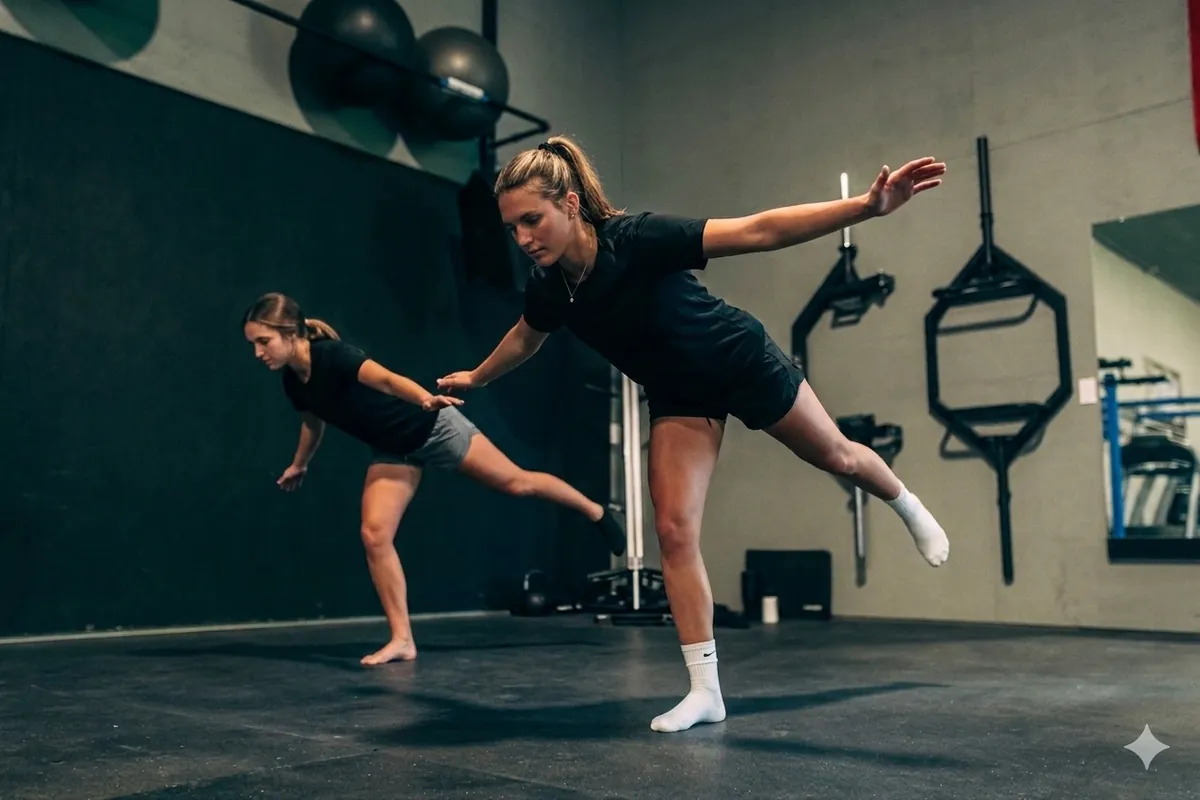
Female athletes tear ACLs at markedly higher rates than male athletes in comparable sports, largely due to differences in landing mechanics, hip and trunk control, and neuromuscular timing rather than anatomy alone. The training that actually reduces risk targets three things: hip and glute strength to control knee position on landing, coached deceleration and cutting mechanics, and neuromuscular training that improves reaction speed under fatigue. Programs that include these components measurably lower ACL injury rates in research studies.
The numbers are well established at this point: female athletes in sports like soccer, basketball, and volleyball tear their ACLs at rates several times higher than male athletes playing the same sports. That gap isn't random, and it isn't fixed. Research over the last two decades has identified specific, trainable factors that explain most of the difference — and specific programs that measurably reduce risk when they're actually implemented.
Why Do Landing Mechanics Matter So Much?
A large share of non-contact ACL tears happen on landing or cutting, at the moment the knee absorbs force. Athletes with poor landing mechanics — knees collapsing inward, landing stiff-legged, or absorbing force through the knee instead of the hip and ankle — put far more stress on the ACL every single time they land. This isn't about being clumsy; it's a coachable pattern that shows up consistently on video and gets fixed with specific cueing and repetition.
The knee doesn't fail in isolation — it fails when the hip above it isn't controlling the landing.
Is It Really About Hip and Glute Strength?
Largely, yes. Weak hip and glute muscles struggle to control femur position during landing and cutting, which lets the knee drift inward — the exact position associated with the highest ACL loads. Strengthening the hips isn't a side note to ACL prevention; in most published prevention programs, it's the central piece, alongside single-leg stability work that forces the same control the knee needs in a real cutting situation.
What About Fatigue and Reaction Time?
A meaningful share of non-contact ACL injuries happen late in games or practices, when fatigue degrades the neuromuscular control that keeps landing mechanics clean. Training that only looks good in a fresh, controlled setting doesn't transfer if it falls apart under fatigue. Effective prevention work is trained under some level of fatigue and unpredictability, not just in isolated, rested reps.
At FPC, this starts with an assessment of landing and cutting mechanics, hip and glute strength, and single-leg stability — then builds a program around whatever's actually showing up as risk, rather than a generic list of jump-training drills copied from a poster.
- Female athletes have significantly higher ACL tear rates than male athletes in comparable sports
- Landing and cutting mechanics — especially knee position — are a major, coachable risk factor
- Hip and glute strength largely determines whether the knee stays controlled under load
This isn't about scaring parents or athletes — it's about the fact that this risk is well studied and largely trainable. An assessment identifies exactly where an individual athlete's risk actually sits, so training targets it directly instead of guessing.
Frequently Asked Questions
Why do female athletes tear ACLs more often than male athletes?
Research points to a combination of factors including landing and cutting mechanics, hip and glute strength differences, and neuromuscular control patterns — not anatomy alone. These factors are largely trainable.
Can ACL injury risk actually be reduced through training?
Yes. Programs that combine landing mechanics coaching, hip and glute strengthening, and neuromuscular training under fatigue have shown measurable reductions in ACL injury rates in research studies.
What age should ACL prevention training start?
Earlier is better — landing and cutting mechanics are easiest to coach and correct before an athlete has years of compensatory movement patterns built in, typically starting in middle school or early high school.
Is strength training alone enough to prevent ACL injuries?
Not by itself. Hip and glute strength matters, but it needs to be paired with coached landing/cutting mechanics and training under fatigue to transfer to real game situations.
How does an assessment help with ACL injury prevention?
It identifies an individual athlete's actual risk factors — landing mechanics, hip strength, single-leg stability — so the training program targets what's really contributing to their risk instead of a one-size-fits-all drill list.
Start With a Free 45-Minute Consultation.
Start with a free 45-minute consultation about your goals, current training, and what is not improving. If FPC is the right fit, Cody will explain the assessment and next steps.
Book a Free 45-Minute Consultation →